
Application




How to Select Precipitated Barium Sulfate for Coating Formulations
Precipitated barium sulfate for coatings is evaluated by more than BaSO₄ content alone. For coating formulators, the practical selection process should consider whiteness, particle-size distribution, coarse-particle control, oil absorption, water-soluble content, pH, dispersion behavior, and compatibility with the resin system. The right filler choice depends on whether the target formula is water-based, solvent-based, powder-based, high-gloss, matte, decorative, or industrial protective coating.
Rather than selecting a mineral filler based only on price or a single technical value, coating manufacturers should compare the material data against the requirements of their own binder, pigment package, additives, production equipment, and finished-film targets. A grade that performs well in one coating system may require additional testing before it is used in another.
For industrial buyers reviewing technical data, precipitated barium sulfate specifications for coatings, inks, plastics, and related applications can provide a starting point for comparison. Final material suitability should always be confirmed through laboratory and production-scale evaluation.
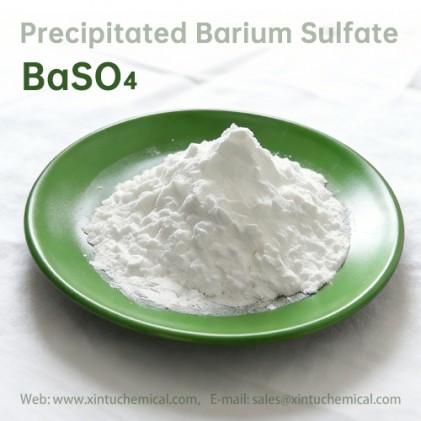
When Precipitated Barium Sulfate Is Suitable for Coating Systems
Precipitated barium sulfate is commonly evaluated as a functional mineral filler in coating formulations where whiteness, fine particle control, stable chemical behavior, and surface appearance are relevant. It can be considered for water-based coatings, solvent-based industrial coatings, powder coatings, printing inks, and selected specialty coating systems.
The filler is usually assessed as part of the complete formula rather than as an isolated raw material. Resin type, pigment concentration, dispersant selection, solvent or water phase, coating thickness, substrate, curing method, and application equipment can all influence the final result.
Coating Performance Targets That Justify Filler Evaluation
A technical review is appropriate when the coating project has clear targets related to appearance, processing stability, or production consistency. Examples include maintaining whiteness in light-color coatings, controlling the surface smoothness of a high-gloss finish, reducing visible particles, improving batch consistency, or managing filler behavior during storage.
- High or stable whiteness in white and light-colored formulations
- Fine particle control for smoother surface appearance
- Consistent dispersion during mixing and application
- Controlled oil absorption for binder and viscosity balance
- Low coarse-particle residue for appearance-sensitive finishes
- Stable behavior during storage and transport of the coating
When Another Mineral Filler May Be More Suitable
Not every coating system requires the same filler profile. Some cost-driven formulations may prioritize a lower-cost natural mineral filler, while other systems may require specialized functional additives, treated grades, or a different particle-size range. The required finish, gloss level, loading level, production process, and quality standard should guide the selection.
For buyers comparing natural mineral grades with chemically produced material, it is useful to understand the difference between barite powder and precipitated barium sulfate before finalizing a formulation trial.
Key Parameters to Review Before Selecting a Coating Filler
Technical data should be interpreted as a group. A filler with high whiteness may still require formulation work if oil absorption, particle distribution, wetting behavior, or compatibility with the dispersant package does not match the system. The following parameters are among the most useful for an initial screening process.
Whiteness and Color Consistency
Whiteness is particularly important in white coatings, pastel shades, light-colored industrial finishes, and formulas where pigment color development must remain consistent. A high-whiteness filler may help provide a cleaner base appearance, but the finished color still depends on the resin, pigments, optical additives, film thickness, substrate color, and curing conditions.
When reviewing whiteness, buyers should compare the supplier’s data with their own internal acceptance range. The final formulation should also be tested using drawdowns or coated panels rather than relying only on powder data.
Particle Size and 45 μm Sieve Residue
Particle-size distribution can affect dispersion, viscosity, surface smoothness, gloss, hiding behavior, and the likelihood of visible particles in the cured coating film. Coarse-particle residue is especially relevant in high-gloss, thin-film, smooth-finish, and appearance-sensitive coating systems.
For example, a formulation may require a fine filler profile to reduce the risk of grit, roughness, or visible specks. However, the desired particle range depends on the entire formula and should not be selected from a single value alone.
Oil Absorption and Binder Demand
Oil absorption is a useful indicator when assessing how a mineral filler may interact with binders and other liquid components in a coating formula. A change in filler oil absorption can influence the amount of resin or wetting components needed to maintain the target viscosity, flow, and application behavior.
Coating formulators should review oil absorption together with solids content, pigment volume concentration, dispersant system, solvent balance, and application method. A laboratory viscosity curve is often more informative than a single initial viscosity reading.
Water-Soluble Content and Formulation Stability
Water-soluble substances can be relevant for water-based coating systems and formulas that are sensitive to ionic contamination, conductivity changes, or pH drift. Buyers should review this value alongside the coating’s preservative package, water quality, pigment dispersion process, and storage requirements.
pH and Compatibility with Water-Based Systems
For water-based coatings, pH can influence dispersion stability, rheology, preservative performance, pigment wetting, and compatibility with other additives. The filler pH should be evaluated in the context of the complete water-based formula rather than treated as an independent pass-or-fail value.
How Requirements Differ by Coating Type
Different coating technologies place different demands on fillers. The most practical approach is to identify the coating system first, then prioritize the parameters most likely to affect processing and finished-film performance.
| Coating System | Priority Parameters | Potential Risk if Mismatched | Recommended Evaluation |
|---|---|---|---|
| Water-based coatings | pH, water-soluble content, dispersion behavior, particle size | Viscosity instability, settling, poor storage stability | Water-based dispersion test, viscosity check, storage test |
| Solvent-based coatings | Oil absorption, particle size, wetting behavior, sieve residue | Viscosity shift, poor leveling, surface defects | Dispersant screening, drawdown test, gloss and leveling evaluation |
| Powder coatings | Fineness, whiteness, coarse residue, flow behavior | Surface roughness, gloss variation, inconsistent film appearance | Extrusion trial, powder flow check, cured-panel inspection |
| High-gloss coatings | Fine particle size, low sieve residue, whiteness, dispersion | Gloss loss, visible particles, uneven finish | High-gloss drawdown, gloss meter test, visual defect inspection |
| Matte coatings | Particle distribution, surface texture, formula compatibility | Uneven matte effect, clouding, poor film uniformity | Panel comparison, texture review, batch consistency test |
Water-Based Coatings
Water-based systems often require close attention to pH, water-soluble content, wetting behavior, dispersant compatibility, and storage stability. A filler that appears acceptable during initial mixing may still create settling, viscosity change, or color variation after storage if the complete additive package is not optimized.
For water-based formulas, a useful test sequence includes a small-batch dispersion trial, viscosity measurement after mixing, drawdown preparation, and accelerated or controlled storage observation. The purpose is to identify whether the filler remains stable in the actual water-based system rather than only in a simplified laboratory mixture.
Solvent-Based Industrial Coatings
Solvent-based industrial coatings may be more sensitive to oil absorption, resin demand, dispersant selection, solvent balance, and the filler addition process. The same filler can behave differently in alkyd, acrylic, epoxy, polyurethane, or other resin systems because each system has its own wetting and rheological characteristics.
Technical teams should monitor viscosity development during filler addition, assess fineness after dispersion, and inspect coated panels for leveling, gloss, color consistency, and visible particles.
Powder Coatings
In powder coating production, filler fineness, whiteness, particle distribution, and compatibility with extrusion and grinding conditions can influence the final powder flow and cured film appearance. A coarse fraction or uneven dispersion may contribute to roughness, gloss variation, or visible surface defects after curing.
For aluminum profile and other powder coating applications, natural barium sulfate may also be considered where the formulation target is cost control and the required finish can be achieved with an appropriate natural grade. For additional context, see barium sulfate options for aluminum profile powder coatings.
High-Gloss and Appearance-Sensitive Coatings
High-gloss finishes usually require closer control over particle size, coarse residue, dispersion, and coating flow. Even a small amount of agglomerated material or insufficiently dispersed filler can become more visible on a smooth, reflective surface.
For these systems, the supplier data sheet should be treated as a starting point. The final decision should be based on drawdown panels, gloss readings, visual inspection under controlled light, and comparison with the existing production formula.
Common Filler-Related Problems in Coating Production
Coating defects are not always caused by a single raw material. Many issues arise from the interaction of filler selection, dispersant chemistry, resin compatibility, mixing energy, addition rate, storage conditions, and application settings. A structured troubleshooting process helps separate material variables from process variables.
Poor Dispersion and Visible Particles
Visible particles, gritty texture, filter blockage, or rough cured surfaces may be associated with agglomeration, moisture exposure, unsuitable dispersant selection, insufficient pre-wetting, inadequate mixing energy, or coarse material entering the process. The first step is to compare the affected batch with a known acceptable control batch.
Unexpected Viscosity Increase
Viscosity may rise when the filler has not been adequately wetted, when the addition rate is too fast, when the dispersant package is not optimized, or when the formula is operating near its binder-demand limit. Oil absorption is one useful value to review, but it should be assessed with the entire formula rather than used as the only explanation.
Reduced Gloss or Uneven Surface Appearance
Gloss reduction can result from coarse particles, incomplete dispersion, surface roughness, poor flow, inconsistent coating thickness, pigment interactions, or curing conditions. Filler evaluation should include drawdown or spray-panel testing so that particle and dispersion effects can be separated from application-related factors.
Settling During Storage
Settling can be influenced by filler density, particle-size distribution, suspension additives, rheology modifiers, dispersant selection, storage temperature, and the time between production and application. A storage test should be included in the qualification process when the coating will be stored before use.
| Observed Issue | Possible Factors to Review | Useful Checks | Next Step |
|---|---|---|---|
| High viscosity after filler addition | Wetting efficiency, oil absorption, addition rate, dispersant package | Viscosity curve, mixing order, dispersant comparison | Run a controlled pre-wetting and addition-rate trial |
| Hard settling after storage | Rheology package, filler loading, dispersion quality, storage conditions | Storage test, sediment inspection, remixing assessment | Review suspension design and process controls |
| Rough or gritty surface | Agglomeration, coarse residue, filtration, contamination | Fineness gauge, sieve information, filter residue inspection | Check raw-material handling and dispersion quality |
| Gloss loss or uneven gloss | Particle distribution, dispersion, flow, film thickness, curing | Gloss test, drawdown comparison, cure condition review | Evaluate material and application variables separately |
| Batch-to-batch appearance variation | Raw-material control, addition sequence, mixing time, pigment dispersion | Batch records, retained samples, color and viscosity comparison | Establish a documented qualification and control procedure |
A Practical Evaluation Process Before Bulk Procurement
A reliable qualification process reduces the risk of purchasing a material that looks suitable on paper but does not fit the actual coating formula. The process should move from defining the application target to laboratory evaluation and then to controlled production validation.
Define the Coating System and Performance Target
Start by documenting the resin system, pigment package, coating type, application method, target gloss, color requirement, viscosity range, storage period, and finished-film expectations. This creates a clear basis for comparing filler data and planning laboratory trials.
Compare Technical Data with Internal Material Limits
Compare the required values for whiteness, particle-size distribution, sieve residue, oil absorption, pH, water-soluble content, and volatile matter with the supplier’s available technical data. For reference, buyers can review available BaSO₄ content, whiteness, particle-size, and oil-absorption information before arranging a formula-specific evaluation.
Run Laboratory Dispersion and Drawdown Tests
Use a controlled formula and keep the comparison conditions consistent. Record the addition sequence, mixing speed, mixing time, temperature, viscosity, grind gauge or fineness, drawdown thickness, and panel curing conditions. Compare the trial against a current approved filler or a retained control formula where possible.
Confirm Packaging and Supply Requirements
After the formula passes initial technical screening, confirm the procurement factors that affect routine production. These may include the expected monthly quantity, required packing format, destination, storage conditions, unloading capability, and delivery schedule. Technical acceptance and supply planning should be reviewed together before a bulk order is finalized.
Coating Filler Evaluation Workflow
The following process can be adapted for most coating development or supplier-qualification projects.
- Define the coating system, resin type, application method, and finished-film target.
- Identify the filler parameters that matter most for the formula, such as whiteness, particle size, sieve residue, oil absorption, pH, or water-soluble content.
- Review the available technical data against internal raw-material requirements.
- Prepare a controlled laboratory batch using a documented addition sequence and mixing process.
- Measure viscosity, fineness, dispersion quality, and storage behavior where relevant.
- Apply drawdowns or spray panels and assess gloss, smoothness, color, leveling, and visible defects.
- Run a pilot or production-scale validation before establishing the approved material specification.
- Confirm packaging, quantity, storage, and delivery requirements for regular procurement.
Typical Application Example
Evaluating a High-Whiteness Filler for an Industrial Coating Formula
A coating formulator was reviewing mineral filler options for a light-colored industrial coating where surface uniformity and color consistency were important. The technical team needed to determine whether the filler could disperse effectively in its resin system without causing an unacceptable increase in viscosity or visible surface defects.
Buyer Requirement: The formula required a fine, high-whiteness filler with controlled coarse-particle content. The team also needed particle-size information, oil-absorption data, and basic chemical indicators to compare against its internal raw-material acceptance criteria.
Evaluation Approach: The formulator prepared a controlled laboratory batch and compared viscosity, fineness, drawdown appearance, gloss, and storage behavior against the current approved formula. The test maintained the same binder, dispersant package, pigment ratio, mixing procedure, and film thickness to isolate the effect of the filler evaluation.
Decision Criteria: The final decision was based on technical compatibility in the coating system, consistency of the finished film, available product data, packaging requirements, and the expected purchasing volume. Bulk procurement was considered only after the formula passed internal validation.
Frequently Asked Questions
Can precipitated barium sulfate be used in water-based coatings?
It can be evaluated for water-based coatings, but compatibility should be tested in the complete formulation. pH, water-soluble content, dispersant selection, rheology modifiers, pigment system, storage stability, and application conditions can all affect the final result.
How does oil absorption affect a coating formulation?
Oil absorption can influence binder demand, viscosity development, wetting behavior, and the amount of liquid components needed to achieve the target application properties. It should be assessed together with the resin system, pigment volume concentration, solids content, and dispersant package.
What particle-size information should a coating buyer request?
Buyers should request the available particle-size distribution and coarse-particle control data, such as sieve residue. The relevant range depends on the coating type, gloss target, film thickness, application method, and acceptable level of surface texture.
Does a finer particle size always improve coating gloss?
Not necessarily. Fine particle control can support a smoother surface in some systems, but gloss also depends on dispersion, resin flow, pigment interactions, film thickness, substrate condition, application method, and curing parameters. The result should be confirmed through coated-panel testing.
Why does a filler-containing coating settle during storage?
Settling may be related to filler density, particle distribution, dispersion quality, rheology control, additive selection, storage temperature, or time. A storage test should be included when evaluating a filler for coatings that will not be applied immediately after production.
Should a coating manufacturer test the filler before placing a bulk order?
Yes. Laboratory testing and, where appropriate, pilot or production validation are recommended before routine bulk procurement. Testing should use the actual coating formula and process conditions whenever possible.
Evaluate the Material Against Your Coating Formula
For coating formulation projects, the most useful inquiry information includes the coating type, resin system, color or gloss target, expected filler loading, application method, required quantity, destination, and any internal limits for whiteness, particle size, oil absorption, or water-soluble content.
Buyers can review precipitated barium sulfate product data for industrial formulations and compare the available specification with their own technical and procurement requirements before arranging further evaluation.


